
Homeowners’ insurance protects your home after a fire, but modern technology can help reduce the risk of a fire happening in the first place. From smart detectors to connected appliances, today’s high-tech tools give homeowners more control, earlier warnings, and better protection for their families and property.
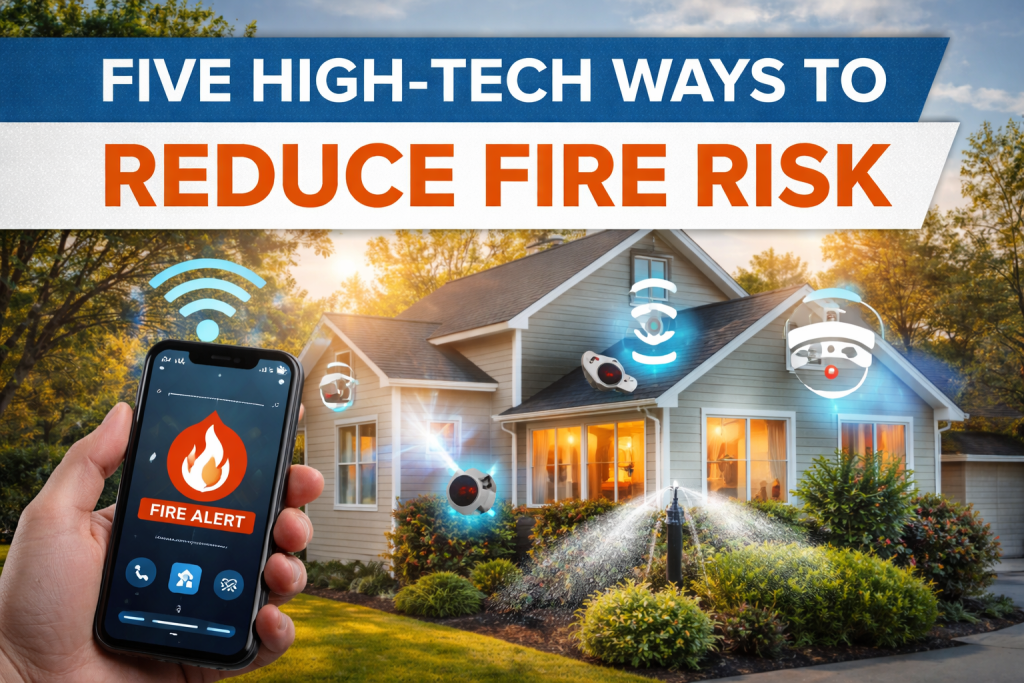
Homeowners Insurance: Five High-Tech Ways to Reduce Fire Risk
Smart Home Technology That Reduces Fire Risk
Smart smoke detectors go far beyond traditional alarms that only beep when smoke is present. These devices use advanced sensors to detect smoke, heat, and carbon monoxide, sending instant alerts to your smartphone.
Many smart smoke detectors connect to your home security system, automatically notify emergency services, and trigger other smart devices—such as flashing lights or camera activation—when they detect smoke.These early alerts can reduce damage and speed up response times, which matters when filing a homeowners’ insurance claim.
Some models of smart smoke detectors have built-in carbon monoxide detectors, too. If the detector picks up a cooking experiment gone wrong, you can silence it with the press of a button. Most smart alarms also send push notifications when the battery is low, instead of the ear-shattering chirp of traditional smoke alarms.
Smart Batteries Upgrade Existing Smoke Alarms
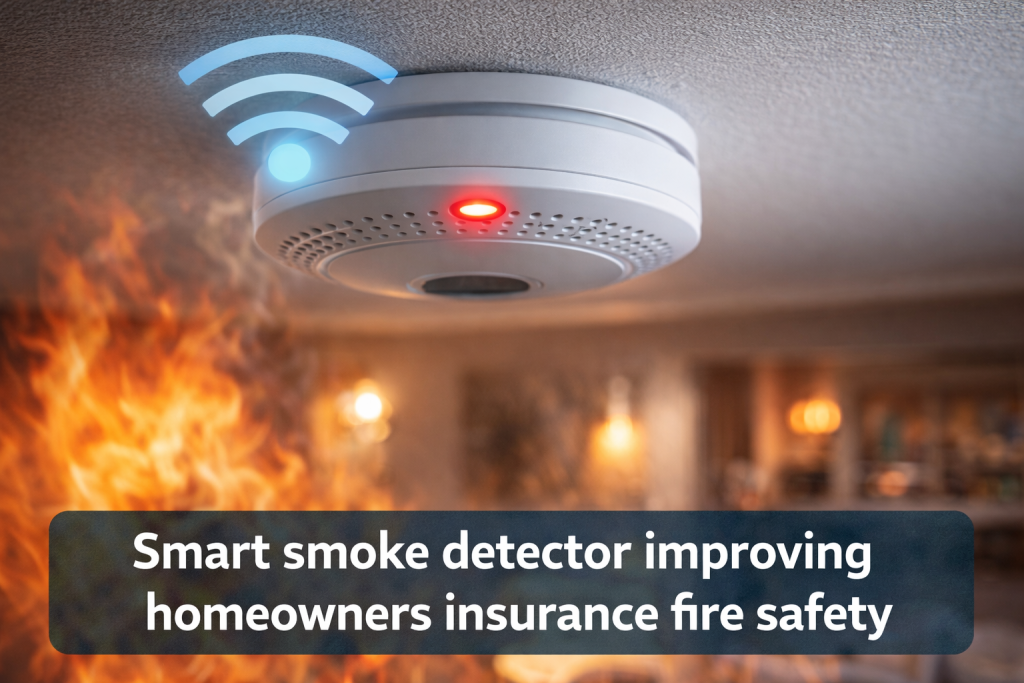
If replacing every detector isn’t practical, smart batteries offer a cost-effective alternative. These batteries turn standard smoke detectors into connected devices.
Instead of chirping at inconvenient times, smart batteries send low-battery alerts to your phone. They can also link multiple alarms together, improving whole-home fire detection without a full system replacement.
Smart Plugs Reduce Electrical Fire Risk
Electrical malfunctions remain a leading cause of home fires. Appliances that generate heat—such as irons, curling irons, or space heaters—pose a higher risk if left powered on.
Smart plugs let homeowners turn appliances off remotely via a smartphone app. If you’re unsure whether you left something on, you can check instantly and cut the power before it causes a problem.This simple step can help prevent losses that impact homeowners’ insurance claims and premiums.
Advanced Smart Home Tools for Fire Prevention
Smart Stovetops Help Prevent Cooking Fires
Cooking is one of the most common sources of house fires. Smart stovetops use heat and motion sensors to detect unsafe conditions.
If the system doesn’t detect motion in the kitchen for a set period, it automatically shuts off the stove. It can also detect sudden temperature spikes and shut the stove down, lowering the chance of a fire spreading when no one is present.
Connected Smart Home Systems Maximize Fire Protection
Fire prevention works best when devices communicate with each other. Smart detectors, plugs, alarms, and cameras should operate via a shared hub or a compatible protocol such as Z-Wave or Zigbee.
When your systems work together, one alert can trigger multiple responses—sirens, flashing lights, phone notifications, and emergency contacts.This layered protection helps homeowners respond more quickly and reduce damage, which directly affects their insurance outcomes.
Why Fire Prevention Matters for Homeowners Insurance
If you want to learn more about the companies I represent as an independent insurance agent, click the link.
According to the Insurance Information Institute, cooking and electrical issues remain the leading causes of residential fires, underscoring the importance of prevention technology.
Your independent agent has the answers to all of these questions, and we’re right down the road, ready to help. Contact us or request a quote to get started.
Insurance Information Institute: common causes of home insurance losses
Here are five high-tech ways to reduce fire risk and strengthen your homeowners’ insurance profile.
While homeowners’ insurance covers fire damage, prevention can:
- Reduce claim frequency
- Limit loss severity
- Help keep premiums stable
- Improve eligibility with certain carriers
Final Thoughts on Reducing Fire Risk at Home
Using Technology to Protect What Matters
Technology can’t eliminate fire risk entirely, but it can dramatically reduce it. Smart devices provide earlier warnings, automatic shut-offs, and better coordination when seconds matter most.
Your financial backstop
Homeowners insurance is your financial backstop—but smart prevention helps protect what matters before disaster strikes.
Review your coverage.
If you’d like to review your coverage or explore insurance options that reward proactive homeowners, you can learn more about home insurance options or request a quote through Beech Agency.
Yes. Homeowners insurance typically covers fire damage to the structure of your home, personal belongings, and additional living expenses if the home is temporarily uninhabitable. Coverage depends on your policy limits and terms, so reviewing them regularly matters.
Smart home devices such as smoke detectors, smart plugs, and connected stovetops can significantly reduce fire risk by providing early warnings, automatic shut-offs, and real-time alerts. They don’t replace homeowners’ insurance; they help you prevent losses before you ever need to file a claim.
Some insurance companies offer discounts for approved safety and monitoring devices. Savings vary by carrier, but smart smoke detectors and connected security systems sometimes improve eligibility for preferred pricing.
Industry data shows that cooking incidents and electrical malfunctions cause most house fires. Technology that monitors heat, motion, and power usage helps homeowners catch problems early and reduce risk.
The state does not require homeowners’ insurance, but mortgage lenders almost always require it. Even without a mortgage, insurance makes sense because rebuilding after a fire costs far more than most homeowners expect.
Yes. Review your homeowners’ insurance after adding smart devices, security systems, or major upgrades. Your coverage limits should reflect your home’s current features and replacement cost.
Homeowners should review their policy at least once a year and anytime they make upgrades or major life changes. Fire-prevention improvements provide a good reason to confirm that coverage still fits the home.